Côte de Beaune · Appellation guide
Monthélie
Between Volnay and Meursault, a winegrowers’ village tucked into its valley: fine, firm reds and rare whites.
- 15Premiers Crus
- 1937Appellation since
Identity card
- Côte
- Côte de Beaune
- The appellation is created
- 31 July 1937
- Colours and grapes
- Almost entirely red (Pinot Noir), a little white (Chardonnay)
- Area under vine (2022)
- 123 ha, including 37 ha of Premier Cru
- Premiers Crus
- 15 climats
- Grands Crus
- None
- Communes
- Monthélie
- Altitude
- 230 – 370 m
- Exposure
- South and south-east
Our climats and those to know
Climats marked with a star are those we make a cuvée from. The others are the names to know in the appellation.
← Swipe the map →
Tap a climat on the map or in the list to discover it. The gold ★ markers are our cuvées.
- ★Our cuvée
- Premier Cru
- Village
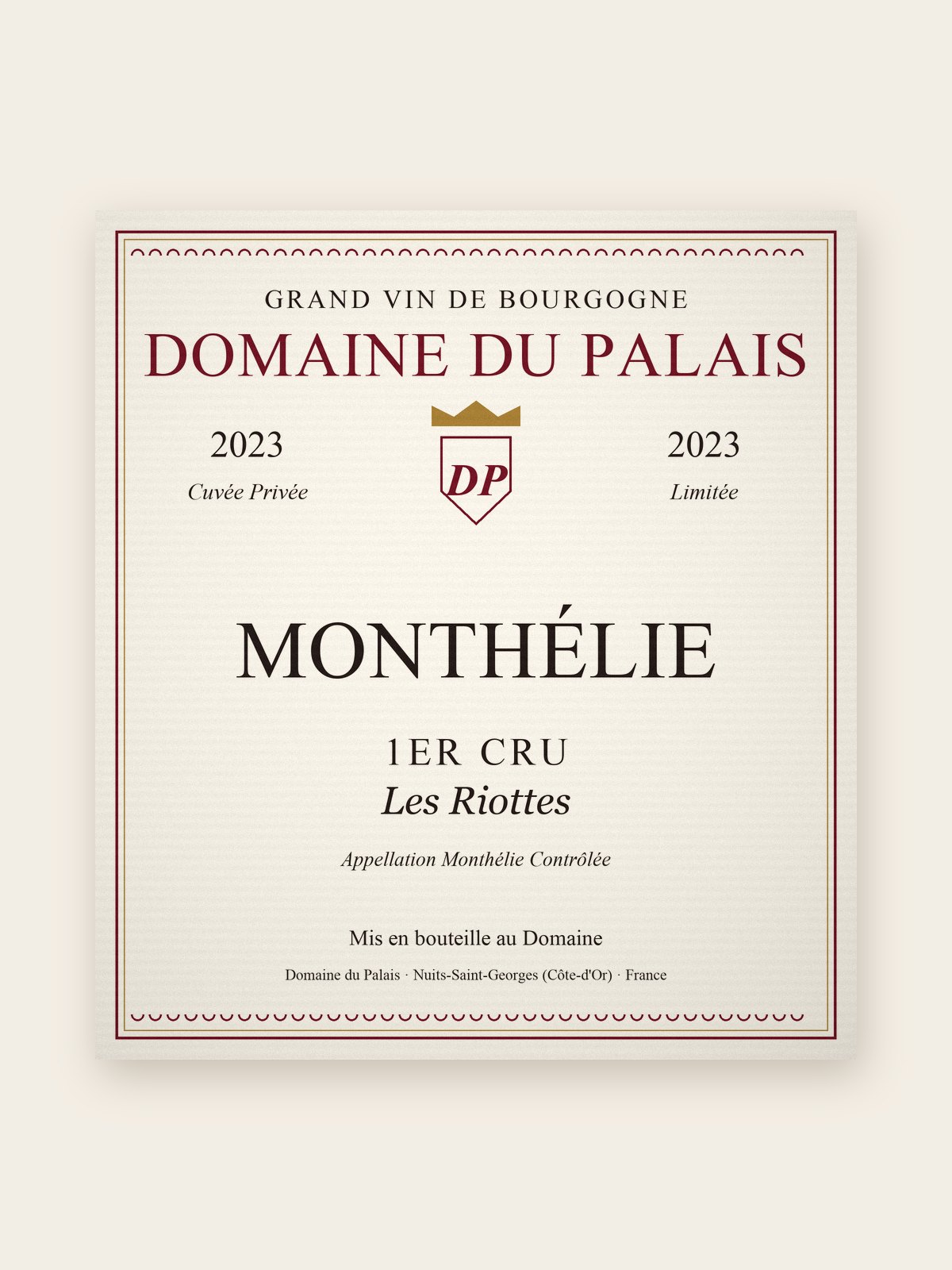
- 1Les RiottesPremier Cru★ At the Domaine
Black fruit and candied prunes: a treat.
- 2Les Champs FulliotsPremier Cru
The commune’s largest Premier Cru (8 hectares): in 1855, Dr Lavalle already saw it as Monthélie’s best climat.
- 3Sur la VellePremier Cru
Six hectares above the village, farmed among others by the Château de Monthélie.
- 4Les DuressesPremier Cru
On the edge of Auxey-Duresses, whose name it shares: nearly 7 hectares, one of the commune’s largest Premiers Crus.
The 16 Premiers Crus of Monthélie
Official BIVB list. The number refers to the marker on the map; the star marks our cuvées.
- Clos des Toisières
- La Taupine
- Le Cas Rougeot
- Le Château Gaillard
- Le Clos Gauthey
- Le Clou des Chênes
- Le Meix Bataille
- Le Village
- Les Barbières
- Les Champs Fulliots
- Les Clous
- Les Crays
- Les Duresses
- Les Riottes ★
- Les Vignes Rondes
- Sur la Velle
The terroir
Facing south and south-east, the vines grow on pebbly Bathonian limestone covered with red clay and marl. On the Auxey-Duresses side, the rock is Argovian limestone and the slopes face east or west depending on the lie of the land. Altitude: 230 to 370 m.
- Altitude230 – 370 m
- ExposureSouth and south-east
- CommunesMonthélie
A little history
The village once belonged to the Abbey of Cluny, and lived so well from its vines, the proverb says, that “a chicken would die of hunger there at harvest time”. Its houses, huddled on the slope, hide fine cellars, and its château still overlooks the village. The appellation was recognised in 1937; its Premiers Crus were classified in 1983, then extended in 2006.
- FormerlyA village of the Abbey of Cluny
- 1937The appellation is created
- 2006The Premier Cru classification is extended
In the glass
Ruby red with cherry, blackcurrant, violet and peony, then undergrowth, bracken and spice with age; a firm, velvety palate with delicate tannins, often compared to Volnay. The white, golden and a cousin of Meursault, blends lemon, hawthorn, reinette apple and fresh hazelnut.
Roast poultry, lamb, rabbit; brie or Brillat-Savarin. With the white: prawns, fish tagine, Époisses.
Our pairing guideOur wines from Monthélie
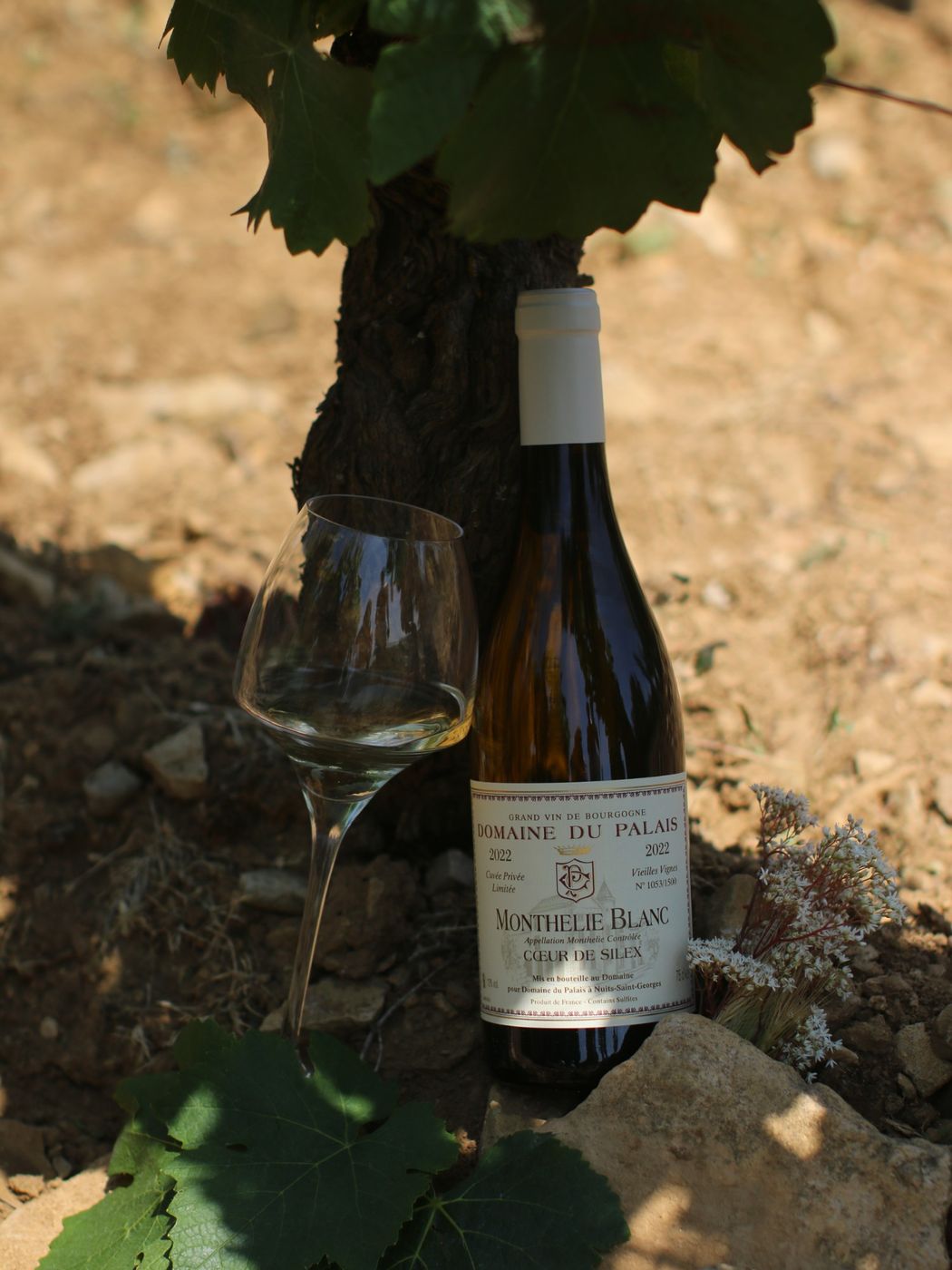
2 wines from this appellation on our list, from 69,50 € to 89,50 € a bottle, to reserve or to taste at the Caves du Palais.
Sources: official appellation sheet from the BIVB ↗ (area under vine, 2022) and BIVB climat maps; schematic map, indicative positions.